Warm Fold: The Quiet Democracy of Britain’s Launderettes
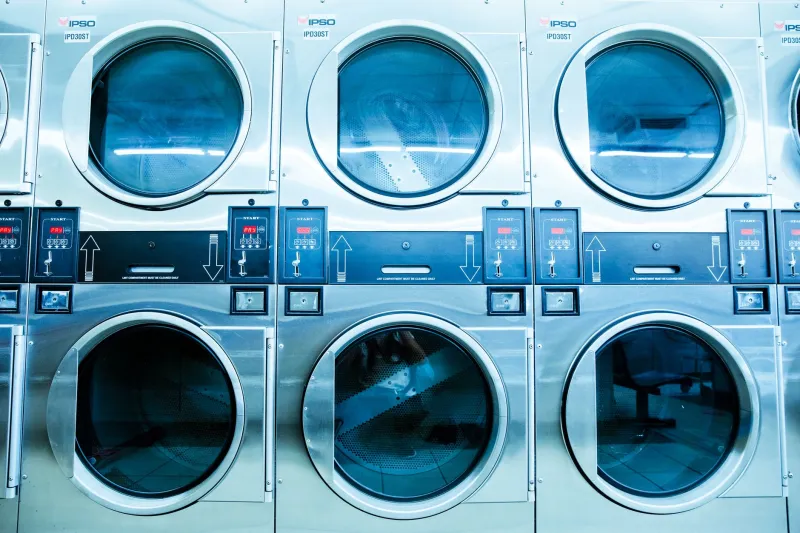
On a wet Tuesday this November, the launderette on the edge of Headingley, Leeds, is doing what it always does: humming. Two students are hunched over phones beside a drum that has gone into its final spin. A retired man in a flat cap is folding towels with the concentration of someone completing a crossword. Behind the counter, the owner is wiping down the lid of a machine and keeping half an eye on everyone’s washing. The room smells of warm cotton, old coins and faintly of someone’s fabric conditioner. Nobody is buying anything they do not need. That is the first clue.
A room with no dress code
Launderettes are not cool, which is part of their charm. They are not curated. There is no booking system, no app, no loyalty card and no minimum spend beyond the coins you feed into the meter. You turn up with a bag of damp towels and join a queue of people who have also run out of clean socks. On a high street increasingly designed around browsing, brunching and tapping a card, this feels almost radical.
The owner in Leeds has run the place for nearly two decades. She knows which regulars will forget their softener and which students will try to dry a whole duvet in one go. She says the launderette is busier than people assume, especially in winter. Renters without machines use it. Families use it for bedding. Shift workers use it at odd hours. People who have had a washing machine break and cannot wait a week for a repair use it. The room does not ask what you do for a living. It asks whether you have a pound coin and a spare hour.
That is the quiet democracy of the place. A launderette is not a community centre in the official sense. There is no timetable of events, no grant funding poster on the wall. But it is a shared room where different lives briefly overlap. The fluorescent light is unflattering on everyone. The plastic chairs are equally uncomfortable. The machines do not care who you are.
The theatre of the spin
There is a small theatre to a launderette, if you sit still long enough. The drum doors open and close like curtains. The coin meter clicks. Someone’s washing rotates into view, disappears, rotates again. A man watches a single duvet tumble with the intensity of a sports fan. A woman reads a paperback while her dryer rumbles. The machines are not quiet, but the noise is steady and oddly calming.
There is etiquette too, unspoken but firm. Do not move someone else’s washing unless it has clearly finished and you are desperate. Share a dryer if there is room. Ask before you unplug anything. Wipe the surface after you fold. These are small civilities, but they matter. In a launderette, strangers have to negotiate a shared space without a host, a menu or a bill. It is not friendship, necessarily. It is something more modest and more useful: manners.
The regulars in Peckham, south London, tell a similar story. A launderette off Rye Lane has become a pit stop for people in flats without machines, for market traders with aprons and tea towels, for night workers who want their uniform clean before a shift. The owner there does a steady trade in service washes, but he also keeps an eye on the room. He knows who is waiting for a dryer and who has popped out for milk. The launderette is not a museum piece. It is infrastructure.
Service wash and the art of handing it over
Not everyone wants the full theatre. The service wash is the quiet hero of the British launderette: you drop off a bag, pay a sensible amount, and collect it later, clean and folded. It is a small luxury that does not feel like a luxury. It returns time to you. It is also a good find in the Rannel sense: a practical, local thing that makes a week run better.
In Leeds, the owner says service washes keep the place going alongside the coin-op machines. People bring in work shirts, school uniforms, bedding, dog blankets and the occasional fancy dress costume that has seen better days. The launderette becomes a behind-the-scenes service for ordinary life. It is not glamorous. It is not meant to be. But it is useful, and useful things are underrated.
The noticeboard economy
The noticeboard is where the launderette reveals its other life. Alongside the opening hours and the washing advice, there are cards for cleaners, guitar lessons, rooms to rent, missing cats and a man who fixes bicycles from a shed. It is a local internet, pinned and peeling. Some of the cards are years old. Some are brand new. Nobody is targeting you with anything. The information is messy and democratic, and it belongs to the room.
That noticeboard says something the high street often forgets. A good place is not only somewhere to buy things. It is somewhere that lets other things happen. A launderette does not need to programme events to create a community. It just needs to stay open, keep the machines working and leave a chair free.
Why the lights stay on
Domestic washing machines are cheaper and more common than they were, but launderettes survive because life is not tidy. Flats are small. Boilers break. Duvets are enormous. Winter coats need a proper clean. Renters move. Students arrive. People need a big machine and a dryer that actually dries. The launderette is not nostalgia. It is a practical answer to a practical problem.
It is also one of the last rooms on the high street where you can loiter without buying a coffee. You pay for the wash, not for the privilege of sitting down. You are not a customer journey. You are a person with a bag. The fluorescent light is harsh, the chairs are hard and the dryer will eat your socks if you are careless. But the room is shared, and that is the point.
If you find one this winter, take your heavy coat or your duvet and sit for a while. Watch the drums turn. Listen to the small talk. You might leave with dry washing and a useful reminder that the high street can still be a room for everyone.