Someone Else Is Driving: Notes from the Back of a British Coach
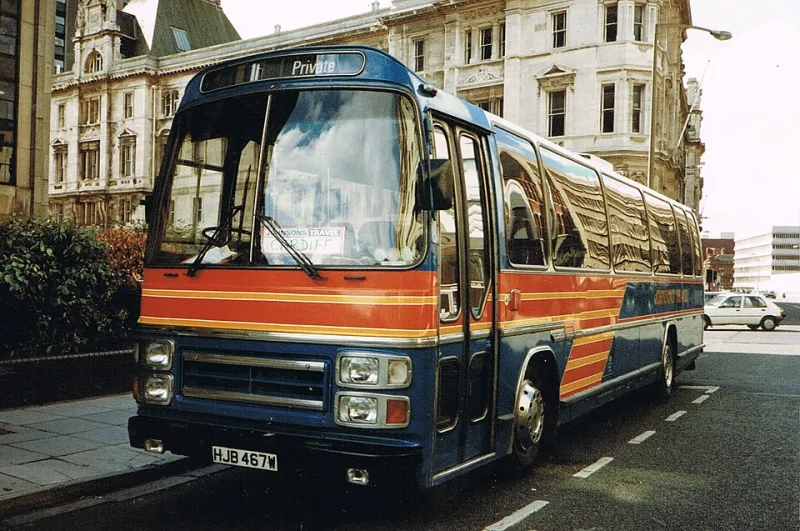
Photo: Secret Coach Park, CC BY-SA 2.0, via Wikimedia Commons
The coach leaves at 7.40am from a bay behind a retail park, which is not how any holiday brochure has ever opened. There are three people already waiting at ten past seven, thermos in hand, comparing routes they've done before. By the time the doors close there are forty-one of us and a driver called Steve who says, without a trace of irony, "Right then, who's on a jolly?"
Almost everyone puts a hand up. I put mine up. It costs £22 return.
The quiet return of the day out
Somewhere in the last couple of years, the coach trip stopped being a punchline. Partly it's money — when a train ticket to the coast costs more than a week's groceries, a £20 day return starts to look less like a compromise and more like a discovery. Partly it's the sheer admin-avoidance of it: no parking, no routes, no rail replacement buses, no driving home in the dark with your eyes stinging.
And partly, I think, it's that people are bored of holidays that feel like work. You turn up, you sit down, someone else decides where you're going. There's a real pleasure in that which we spent twenty years pretending didn't exist.
What happens at the back of the coach
The back row is where the characters end up, and it's where you want to be. On my last trip: a retired postal worker called Margaret who has done forty-two of these and rates each one out of ten in a notebook; two friends from Bolton who brought an entire pork pie and a folding knife; and a man named Derek who didn't speak for ninety minutes and then delivered a fifteen-minute monologue about the decline of the seaside pier, which was genuinely excellent.
By the second hour, people are swapping snacks. This is not a metaphor. Crisps travel the length of the aisle. Someone produces a bag of Werther's and it comes back empty.
It is, in the most literal sense, a captive audience — but nobody seems to mind being captive. There's a thing that happens on coaches, on trains, in waiting rooms, that doesn't happen anywhere else in modern life: you talk to strangers, because there's nothing else to do and no polite way to leave.
The stops are the point
A good coach itinerary isn't about the destination. It's about the stops — the market town nobody would ever choose, the garden centre with a decent café and a farm shop, the two-hour gap in a place where you end up walking a loop you'd never have found on your own.
I've had a better afternoon in a wet Carmarthenshire town centre than on some city breaks, purely because I had no expectations to fail.
Look for operators that build in genuine time. Anything advertising "three stops in one day" is a shopping trip wearing a hat. Two hours somewhere is a wander; forty minutes is a queue for the loo.
The economics nobody mentions
Here's the unglamorous maths. Return train, London to the coast, on a Saturday, booked a week out: £48 at best, often more. Coach: £20-£30. Fuel and parking for a family of four: £40 plus £12 for the car park. Coach for four: £88, and nobody has to not drink at lunch.
Then there's the luggage question. Coaches take suitcases, pushchairs, walking boots, a cool box. No one weighs your bag. Try that at a ticket gate.
A weekend break with two nights in a decent B&B, transport included, regularly comes in under £200 a head. That's a number that would have sounded absurd in 2019 and sounds like relief in 2026.
Company, whether you like it or not
I should be honest about the trade-off. Coaches are not quiet. There will be a raffle. There will be a running commentary from the driver, and it will include at least one fact that is definitely wrong. There will be a person who is late back at every single stop, and everyone will know who they are by lunchtime.
If that sounds like hell, don't book. If it sounds faintly charming, you're the target audience, and there are more of you than you'd think.
What strikes me most is who's on board. It's not just coach parties of old — the average age on my last trip was maybe fifty, with a scattering of students, a couple in their thirties with a toddler, and a lone walker heading for a coastal path. People who've done the calculus: this is the cheapest way to get somewhere else for a day, and the company is free.
Watching Britain out of the window
At some point past the third roundabout, the motorway gives way to hedges and the hedges give way to a view of a reservoir you'd never noticed. Someone in front of you is asleep. Someone behind is telling a story about a caravan. The light comes through the window and it's warm, which in November is no small thing.
I got home at 8.15pm, mildly stiff, faintly sunburnt on one side of my face, and having spent under £30 for the whole day including a decent fish and chips. I'd also learned the name of the woman across the aisle, and she'd recommended a bakery in a town I'd never heard of that morning.
Slow travel is having a moment, and the coach is its least fashionable, most honest expression. It's not romantic. It isn't trying to be. It's forty-one people, a thermos, and somebody else doing all the driving.