The Half-Hour Club: Britain’s Benches and the Art of Doing Nothing in Public
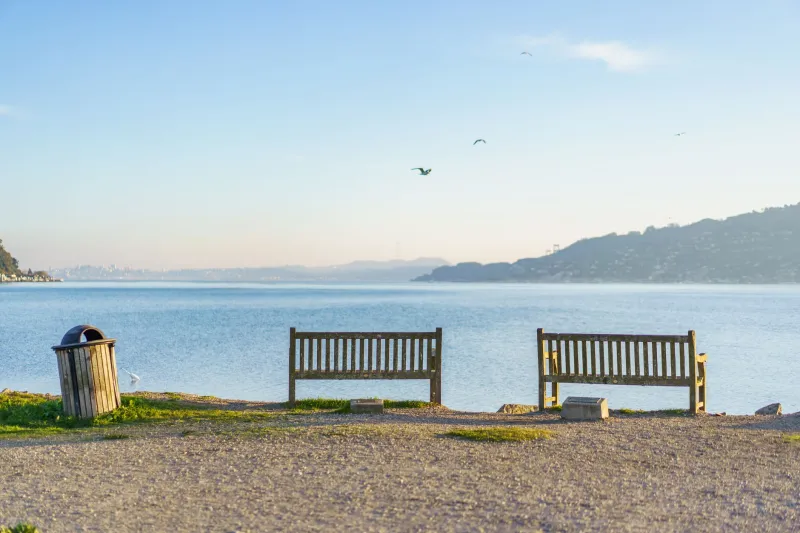
There is a bench on a promenade somewhere near you with a plaque that reads something like: In memory of Alan, who loved this view and a good sit-down. It is not a grand monument. It is three slats, two cast-iron ends and a small brass rectangle, and yet it may be the most useful piece of public writing in the town. Alan is not asking you to remember him. He is asking you to stop walking for a minute. That is a modest request, and Britain is very good at answering it.
We tend to talk about public space as if it were a matter of paving, planting and bin collections. Benches get overlooked because they do not do anything loud. But a bench is a small piece of social infrastructure with a long memory. It hosts first dates and last cigarettes, lunch breaks and baby feeds, quiet grief and loud crisps. It is where a town puts its feet up.
The plaque economy
Memorial benches are their own branch of local literature. Some plaques are formal and municipal. Some are funny. Some are almost unbearably plain: For Mum, from all of us. The best ones say where to sit and what to look at. They turn a piece of street furniture into a small instruction manual for living: face the sea, watch the dogs, take the weight off.
There is an etiquette to reading them. You do not peer. You do not ask the sitter if they knew the deceased. You glance, you nod, you sit at the other end if the bench is long enough. The plaque is not a conversation starter so much as a conversation permission slip. It says: this seat has a history, and you are welcome to add half an hour to it.
A short syllabus of sitting
Bench etiquette is rarely written down, which is why it works. The main rule is that the bench belongs to whoever is on it, but only partly. You can share. You should share. You just have to read the room.
A single sitter with a folded newspaper and a flask is not necessarily lonely. They may be running a small, open-air office. A pair of friends who go quiet for ten minutes are not falling out; they are simply doing the thing benches are for. A dog under the slats is a diplomatic envoy. A person with headphones is politely elsewhere.
The arms are the subtle border policy. On a bench with dividers, everyone gets a defined patch and the middle seat becomes a no-man’s-land of bags and coats. On a bench without arms, the unspoken rule is that you leave a gap the width of a decent paperback. If someone sits closer than that, they either need help or they know you.
The nod is the standard greeting. The half-smile is the upgrade. A full conversation is not required, and often not wanted. The genius of the bench is that it lets people be alone together without making a fuss about it.
Who keeps the slats together?
Benches are cheap to love and expensive to keep. Wood rots. Paint flakes. Bolts work loose. Vandalism happens. Councils have budgets that do not stretch, and friends groups have volunteers who do. Across the country, local groups, Men’s Sheds, rotary clubs and anonymous donors quietly adopt benches, sand them down, replace slats and re-stain them before another winter gets in.
Modern benches are often made from recycled plastic or responsibly sourced timber, with cast-iron or steel ends that can outlast several generations of sitters. The best designs are boring in the right way: sloped slightly back, high enough to stand up from, with a bit of give in the slats. A bench that looks good in a photograph but hurts your back after four minutes is a failure of public design.
Maintenance is not glamorous, but it is a form of care. A bench with a fresh coat of paint tells you somebody noticed. A bench with a loose bolt tells you nobody has. If you want to read a town’s priorities, look at what it fixes before it needs replacing.
The quiet theatre of the square
Town-square benches run on routine. The same faces arrive at the same hours. The early sitter gets the sun. The afternoon sitter gets the shade. Someone brings a bag of pigeons. Someone else disapproves of the pigeons. A teenager eats chips with the concentration of a concert pianist. Two retired men debate the parking situation as if it were a matter of state.
None of this is organised. That is the point. A bench is a stage with no script, and the cast changes without anyone auditioning. It is also a reminder that public life does not have to be an event. You do not need a market, a festival or a licence to sit down. You just need a seat and a bit of time.
How to join the club
Find a bench. Sit on it. Stay for longer than feels strictly necessary. If someone else arrives, make room. If they want to talk, talk. If they do not, look at the view. Bring a flask if it is cold, a paper if it is not. Leave the plaque alone. Take your litter with you. Do not hog the middle.
It sounds trivial, and maybe it is. But doing nothing in public is one of the last genuinely sociable acts left. It costs nothing, asks for nothing, and makes a street feel less like a corridor and more like a room. Britain’s benches are not the country’s most obvious social club. They are just the most honest one. All you have to do is take a seat.