The Fiver That Buys a Whole Evening: How the Pub Quiz Still Holds a Room
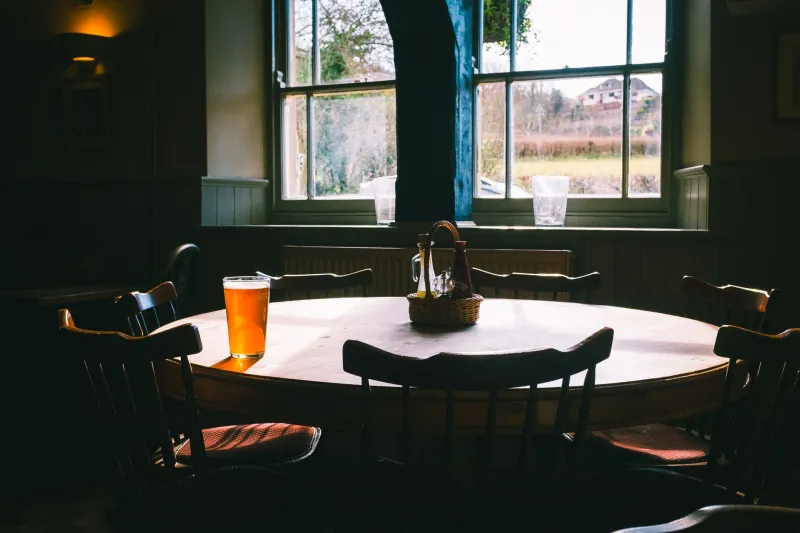
There is a particular sound a pub makes at about 8.55pm on a Tuesday. Paper rustles. Chairs are dragged across worn carpet. Someone taps a microphone that has seen better decades. A quizmaster in a fleece asks whether anyone has a pen, and four tables simultaneously pretend they came prepared.
This is not a big night out. There is no dress code, no booking fee and no reason to arrive early unless you want the table with a bit of elbow room. A pint and a fiver will usually do it. In 2026, when so much of social life has been optimised, ticketed and paid for in advance, the pub quiz remains stubbornly low-tech. That is its quiet genius.
The answer sheet is a social document
The quiz itself is only half the entertainment. The other half is the answer sheet: a single sheet of A4 that becomes, for two hours, the minutes of a small and temporary committee. There are crossings-out, arrows, a question mark beside the year of a battle, and at least one answer written by the person who was absolutely certain and absolutely wrong.
You learn things about people at a quiz that you would not learn over a normal pint. You learn who panics in the music round, who knows the name of every motorway service station, and who will argue for ten minutes that a question is ambiguous when the rest of the table has already moved on. Friendly rivalry is the point. The best teams are not the cleverest ones. They are the ones with the widest spread of random knowledge and the good sense to laugh at themselves.
The team name is the easy part. It is also the bit everyone thinks is funnier than it is. That is fine. A pub quiz needs a few terrible puns to get going.
Everyone has a weak spot, and that is the pleasure
A good quiz does not just test what you know. It gently exposes what you do not. There is always a geography round for the person who cannot place a county, a soap round for the person who has never watched one, and a local history question that only three tables in the room could possibly answer. The picture round is a particular kind of democracy: everyone has a go, nobody is quite sure, and the person who recognises a 1970s children's television presenter becomes briefly heroic.
This is rare. Most of adult life asks us to appear competent. The pub quiz asks us to be bad at something in public, in a room full of people who are also bad at something. That is not humiliating. It is relaxing. 'I don't know' is an acceptable answer. Sometimes it is the only honest one.
The weaknesses are what make the evening. If everyone knew everything, there would be no discussion, no debate, no quiet delight when the quietest person at the table produces the correct answer to the question everyone else had given up on.
The economics of a very good night out
A pub quiz is one of the last great bargains of British social life. Entry is often two or three pounds, sometimes a fiver, sometimes nothing at all if the pub is using it to fill a quiet night. There is usually a raffle, often for a meat tray or a bottle of something, and often for a local charity. The prize might be cash, a voucher, or a round of drinks. Nobody is getting rich.
That is the point. The quiz supports the pub on a night when it might otherwise be empty, and it gives the rest of us a reason to leave the house on a Wednesday. Compare it with a cinema ticket, a restaurant booking or anything that requires a QR code. The quiz is cheaper, slower and considerably more likely to end with a stranger lending you a pen.
The quizmaster is usually local, not professional. The questions have a house style: one round that is too hard, one music round with crackly audio, one local question that only three tables know. These are not flaws. They are signatures. A quiz that was perfectly calibrated would be less fun, and it would certainly be less British.
The unwritten rules are the real institution
Every pub quiz runs on a small constitution of unwritten laws. Phones go face down, or into a basket, or at least out of sight. Shouting out an answer before the question has finished is frowned upon. Arguing with the quizmaster is allowed, but only briefly. The tie-breaker is sacred, even when it is obviously arbitrary. The team that wins is expected to be gracious. The team that loses is expected to claim they were robbed.
These rituals matter more than the trivia. They are the reason a pub quiz feels like a local institution rather than a competition. It is one of the few spaces where students, retirees, shift workers and families can sit in the same room without anyone having to organise an icebreaker. You do not need to be good at it. You just need to turn up and be willing to have a go.
That is also why it survives. In an age of curated feeds and personalised recommendations, the pub quiz is gloriously uncurated. You cannot tailor it to your interests. You have to sit with what you do not know, and with the people around you who might. For a fiver, that is remarkable value.
So find your local. Bring a pen, bring a friend, and accept that you will probably lose the picture round. The answer sheet will be a mess. The music round will be too quiet. Someone will suggest a team name that makes everyone groan. And for a couple of hours, the room will belong to everyone in it. That is the quiet genius of the British pub quiz. It is not really about knowing the answers. It is about being in the room when the questions are asked.