The Gravy Hour: Why Britain’s Carvery Still Feeds a Room Better Than Any Brunch
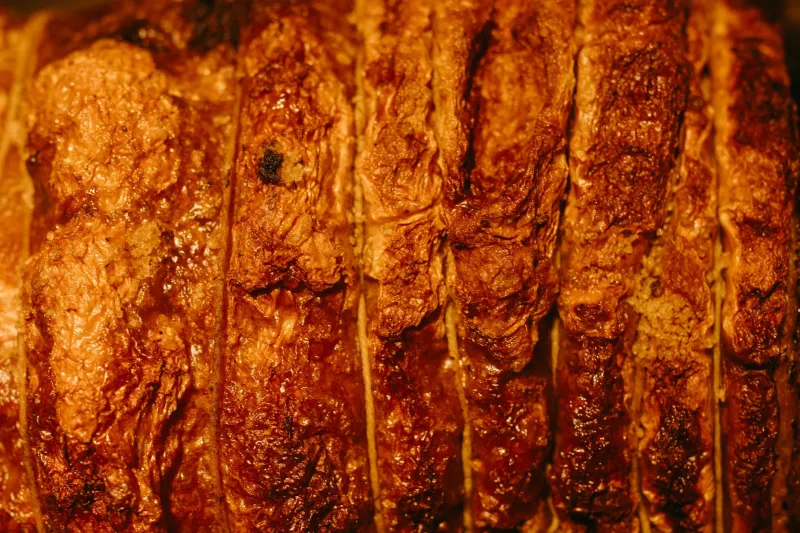
There is a particular sound to a carvery. Not the clatter of a busy restaurant, nor the hush of somewhere with a tasting menu and a waiting list. It is the low, contented murmur of people shuffling forward with plates in their hands, eyeing the gravy boat like it might be withdrawn without notice. Add the beige hum of the function-room lights, the squeak of a trolley wheel and the sight of a Yorkshire pudding the size of a side plate, and you have one of the most reliable British outings going.
In 2026, that matters more than it sounds. Brunch has had its decade. Small plates have had several. We have all been asked to share three things we did not want and pay for the privilege in a room with exposed brick and a playlist that is slightly too loud for a Sunday. The carvery, meanwhile, has been quietly doing what it has always done: feeding people, in public, without pretending to be anything other than what it is.
This is not a review of one roast. It is a field note from three rooms: a seaside hotel, a social club and a market-town pub. Three very different carveries, one shared truth. Sometimes the best Sunday lunch is the one you are not supposed to be excited about.
The queue is the point
We are told to hate queues. Queues are for airports, passport control and the post office on the last day before a bank holiday. But the carvery queue is a different animal. It is slow, visible and oddly companionable. You can see what is coming. You can change your mind about cabbage. You can eavesdrop on a stranger debating whether the pork wants apple sauce or whether that is a step too far before noon.
The queue also does something clever: it gives the whole meal a shape. You arrive, you settle, you queue, you eat, you linger. Nobody is trying to turn the table in forty-five minutes. Nobody is asking if you have finished, when there is still half a Yorkshire pudding on the plate. The carvery is not fast food. It is medium-slow food with a ladle.
A seaside hotel does not need to be cool
The first carvery I visited this year was in a seaside hotel on the edge of a town that has seen better days and knows it. The carpet was the colour of weak tea. The windows had that slightly steamy look that suggests a hundred Sunday lunches have come and gone before yours. A sign by the door said Please Wait to Be Seated, and a sign by the meat said Please Ask for Extra Gravy. Both were being obeyed.
What struck me was not the food, though the beef was better than it had any right to be, and the roast potatoes had been given the time they needed. It was the room. Families with three generations at one table. A couple in walking gear. Two men who looked as if they had been coming for years and had long since stopped discussing it. The lighting was slightly too bright. The condiments were in sachets. It was, in the best way, nobody’s idea of a destination.
And that was the pleasure of it. A seaside carvery does not ask you to dress up or book ahead or pretend you are having a more interesting Sunday than you are. It gives you a hot lunch, a view of a grey sea if you are lucky, and the sense that the town still knows how to look after its own.
The social club knows something restaurants forgot
The second carvery was in a social club in the West Midlands. I was invited by a friend who said, with no irony at all, that the carvery was the best in the area, and that the beer was cheaper than the car park. Both turned out to be true.
If the seaside hotel was about atmosphere, the social club was about logistics. A hatch. A rota. A very serious man in a white apron carving turkey with the concentration of a surgeon. The Yorkshire puddings were enormous, the stuffing was a brick of herby joy, and the gravy came in a jug that suggested the club had once catered a wedding and never quite got over it.
What the social club understands is that a carvery is not a restaurant experience. It is a communal one. You sit where there is space. You talk to the people next to you because there is no background music to hide behind. You notice that the couple at the next table have brought their own reading glasses and a newspaper, and that nobody minds they are taking their time. The club does not need to be cool. It needs to be useful. And a carvery, at its best, is useful: a warm room, a full plate, a reasonable bill and no pressure to leave.
In a market town, the carvery is civic infrastructure
The third carvery was in a pub in a Shropshire market town. By then I was starting to feel like a man on a mission, though the mission was mainly gravy. This one was the most polished of the three: a proper pub, not a function room, with a fire in the bar and a dining room that had been done up without being done over. The carvery station was tucked into a corner, and the queue wound past a window that looked out onto a high street with a butcher, a bakery and a shop that sold nothing but candles.
It was here that the carvery felt most like civic infrastructure. The town was small enough that people nodded at each other. A family was celebrating a birthday with a cake they had brought themselves. An older man was being helped to the car very station by a member of staff who clearly knew exactly how he liked his beef. There was no performance to it. No one was taking photographs of the plate. They were just eating lunch, together, in a room that had been built for exactly that.
The economics of a second helping
Let us talk about value, because that is part of the appeal and there is no point pretending otherwise. In 2026, a carvery is one of the few places where a family of four can eat a proper Sunday lunch without doing a small calculation about whether the children really need pudding. You get meat, potatoes, vegetables, Yorkshire pudding and gravy. You get unlimited gravy, which is its own small mercy. You get a seat. You get a table. You get to sit there for an hour and a half and no one asks you to move.
That is not a small thing. The carvery is not cheap in the way a supermarket meal deal is cheap. It is cheap in the way a good pair of boots is cheap: it does the job, it lasts the afternoon, and you do not resent it. The portions are generous without being performative. The queue means you see what you are getting before you commit. The gravy is not a garnish. It is a food group.
Why it works in 2026
The carvery has survived because it has never tried too hard. It has not chased trends. It has not rebranded itself as a sharing concept or a small-plates experience. It has simply kept the lights on, the meat hot and the Yorkshire puddings large. In a year when everything seems to be either a subscription or an event, that is strangely radical.
It also does something that a lot of modern eating out forgets: it gives you a reason to sit down with people you might not otherwise sit down with. The carvery is not a date. It is not a celebration. It is a Sunday lunch, and Sunday lunches are for everyone: the grandparents, the toddler, the friend who has just moved back to town, the person who has been on their own all week. You do not need to book a personality to attend.
So yes, the carvery is having a moment. Not because it has been reinvented, but because it has been there all along. It is the lunch you can afford, the room you can fill, the queue you can join. It is Britain’s most unfashionable Sunday lunch, and it is quietly one of the best. Pass the gravy. I’ll wait.