Read the Butter Stains: What a Handwritten Recipe Knows That a Cookbook Can’t
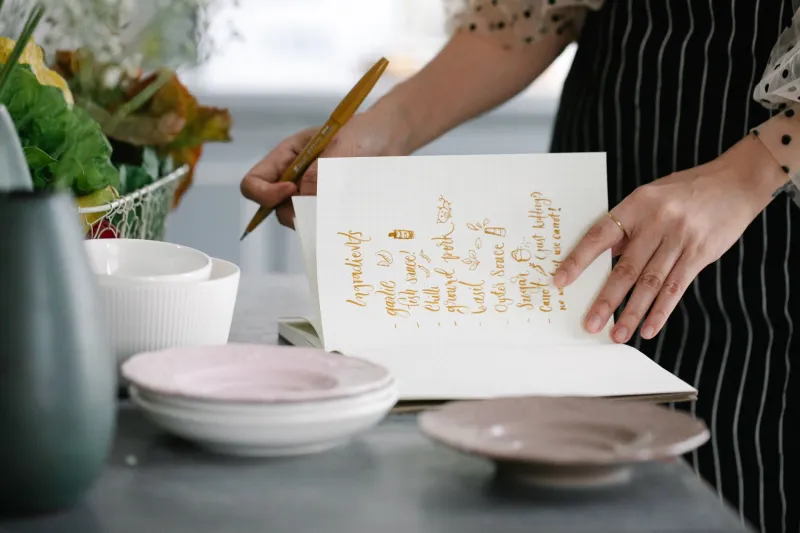
Most cookbooks arrive with a spine you can crack and a photograph of a kitchen that has never seen a Tuesday. A handwritten recipe book arrives with a grease spot shaped like Lincolnshire and a note in the margin that says ‘too much salt, ask Mum’. One is a manual. The other is a witness statement.
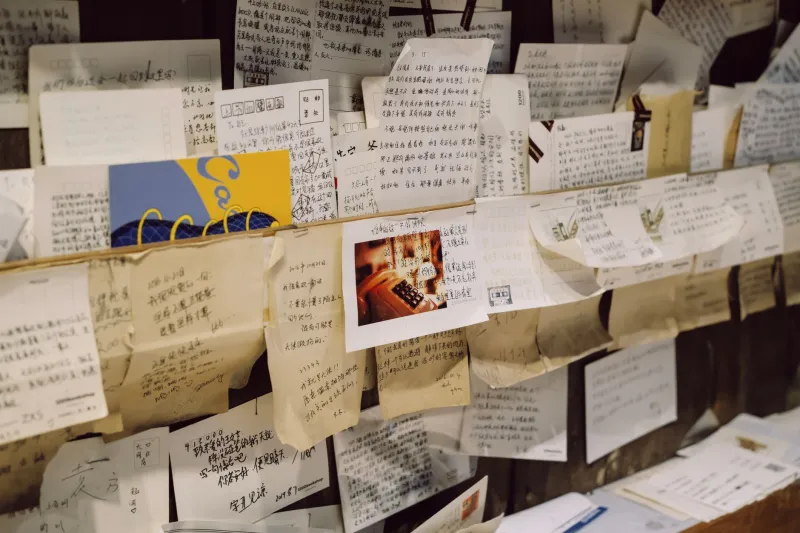
That difference matters more than we tend to admit. In a country that loves a good find, the best one may already be in your kitchen: a notebook held together with an elastic band, a stack of index cards in a tin, a folder of photocopies annotated by three generations. These are not lesser recipes. They are better records.
The Case Against Pristine
Pristine recipes are suspicious. A clean card is a promise; a dirty one is a report. The splatter near the top of a page tells you the mixture spits. The ring mark on the corner says someone rested a mug there while waiting for the oven to come up to temperature. The crossed-out line and the pencilled replacement say the first attempt was not the final word.
Handwritten recipes also speak in a language that glossy books sand down. They say ‘a knob of butter’, ‘enough milk’, ‘gas mark 4-ish’, ‘fan oven, subtract 20’. They assume you know what a moderate oven feels like, or that you will learn. They are not trying to be universal. They are trying to be useful in one kitchen, for one family, on one street.
That is not vagueness. It is context.
A Church Hall, a Kettle and a Stack of Cards
On a damp Wednesday in Sheffield, a recipe-swap club meets in a church hall with a kettle that takes a full ten minutes to come to the boil. There is no fee, no judging and one rule: bring a recipe you have actually cooked. Not one you have saved. Not one you have screenshotted. One you have made, ideally more than once.
People arrive with cards in sandwich bags, notebooks with broken spines and photocopies of photocopies. A woman called Margaret brings a Yorkshire parkin recipe written on the back of a garage receipt. A younger member brings a laminated card for lemon drizzle with a burnt corner and a note that says ‘do not answer the door while zesting’. Someone else has brought a Welsh cake recipe that has been copied so many times the handwriting has become a rumour of itself.
The swap is not really about swapping. It is about saying out loud where a recipe came from and what went wrong. The best card in the room is rarely the neatest. It is the one with a story attached: the cheese straws that saved a buffet, the chutney that took three years to get right, the Sunday roast timing that assumes a pub lunch beforehand.
This is the quiet value of the handwritten recipe. It is not just a list of ingredients. It is a little black box of domestic decision-making.
The Bookstall Find
At a second-hand bookstall in Norwich, the handwritten notebooks are not on the main table. They are kept in a crate under the till, which is exactly where you would put something you know will sell but do not want to shout about. The seller says they go faster than the celebrity chef hardbacks. People pick them up, read a page, laugh, and buy them for the price of a coffee.
You can spot them without opening the cover. No ISBN. No glossy photograph of a whisk. A shopping list on the inside back page. A recipe for ‘mock crab’ that involves a lot of cheese and no crab. A page headed ‘Christmas 1998’ with a gravy instruction that simply says ‘don’t rush it’.
The bookstall seller has a theory: people are not buying the recipes. They are buying the handwriting. They are buying the sense of a kitchen that existed before them, with its own rhythms and shortcuts and small failures. The recipes are almost a bonus.
What the Mess Tells You
A handwritten recipe book is an archive of substitutions. It records what happened when the self-raising flour ran out, when the oven ran hot, when someone was cooking for a vegetarian and did not want to make a thing of it. It holds regional quirks: the Lancashire hotpot that insists on a layer of black pudding, the Scottish tablet that warns ‘stir until your arm regrets it’, the Norfolk dumplings measured in handfuls.
It also holds people. Names appear in margins: ‘Auntie Joan’s’, ‘from the woman at number 14’, ‘Dad’s version’. A recipe can be a small memorial. It can also be a joke, a warning or a peace offering. The handwriting changes over the years. The ink changes. The paper yellows. The recipe stays.
And unlike a cookbook, it does not pretend to be definitive. It is a working document. It expects to be amended. That is why it survives.
How to Keep Yours Before the House Move
You do not need to be a historian to save a kitchen archive. You just need to be a bit ruthless about the next clear-out.
Start with one recipe, not the whole book. Photograph it in daylight, scan both sides if there is writing on the back, and record who wrote it, where it came from and what the vague bits mean. If ‘moderate oven’ means 180C in your family, write that down. If ‘a cup’ means a particular mug, measure it once and note it.
Cook the recipe once while the person who knows it is still around, if you can. Ask questions. Take notes. Then annotate your copy. A recipe that has been cooked and corrected is more valuable than one that has been preserved in amber.
Keep the originals dry and together. A labelled box is fine. A ring binder with plastic sleeves is fine. A digital folder with clear filenames is fine. Do not wait for the ‘good’ notebook. The good notebook is the one with the stains.
And share copies. A recipe that stays in one drawer is a secret; a recipe that moves between kitchens is a living thing. Swap it at a church hall, send it to a friend, add it to the family group chat. The point is not to create a museum. The point is to keep the kitchen talking.
The Stain Is the Provenance
A clean recipe tells you what someone hoped would happen. A stained one tells you what did. The butter mark, the folded corner, the note that says ‘less sugar next time’ — these are not flaws. They are the evidence of a life being cooked.
So before the next house move, before the next skip hire, before the next ‘we’ll digitise it one day’, rescue the notebook. Read the margins. Cook the strange recipe. Ask the question while there is still someone to ask. The best thing in your kitchen may not be the pan you saved up for. It may be the card in the tin that someone else already spilled something on.