The Last Unedited Feed: Britain’s Noticeboards Still Run on Trust and Sellotape
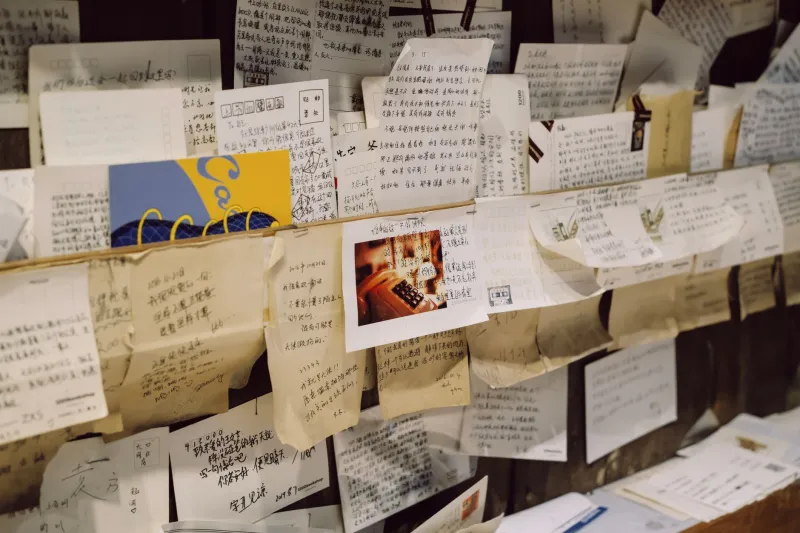
There is a particular kind of British afternoon—grey light, drizzle doing that thing where it can’t commit—when the best thing you can do with twenty minutes is stand in front of a noticeboard. Not scroll. Stand. The one by the library door, maybe, or in the post office queue, or under the porch of a church you’ve never been inside. It is the last unedited feed most of us will ever encounter.
No one is optimising it. No one is A/B testing the font. There’s no engagement metric, no sponsored slot, no little prompt asking whether you’d like to see more content like this. There is just a sheet of cork, a tub of drawing pins, and a town trying to tell itself what it cares about.
The Feed That Never Learned to Sell You Anything
In November 2026, when half the high street is already trying to sell us Christmas and the other half is apologising for the state of the pavement, the noticeboard remains stubbornly unbranded. It is local media at its most local: written by people who will see you in the Co-op on Saturday, pinned by someone who has run out of Blu Tack, and edited only by gravity.
That is not a flaw. It is the point. A noticeboard is what a place looks like when nobody is trying to go viral. It is slow, awkward, occasionally illegible and deeply human. It also contains more useful information about a town than most council websites manage in a year.
A Field Guide to the Pinned and the Laminated
Spend five minutes at any good board and you’ll start to recognise the archetypes. There is the handwritten plea, usually on lined paper, often with a biro that is running out: lost cat, missing keys, a request for a lift to the hospital on Thursday mornings. There is the laminated memorial, faded at the edges, still holding its place years after the funeral, because someone cannot quite bear to take it down. There is the yoga flyer that has outlasted two parish clerks, a change of council and at least one renovation of the village hall. Its class times may be wrong. Its phone number may be disconnected. But it is still there, a small monument to optimism.
Then come the business cards, the dog-walker ads with a mobile number and a cartoon paw, the room-to-let notices with the rent written in felt tip, the book group invitations, the repair café dates, the parish magazine cover, the occasional furious letter about parking. It is a collage of needs and offers, and it is updated by hand.
The Tear-Off Tab Is the Original Hyperlink
The tear-off tab deserves its own paragraph. A strip of paper, sliced at the bottom, offering a phone number you can take away with you. It is analogue click-through. It is also a tiny act of trust: the person who pinned it believes you will take one, and not all of them. There is an etiquette to it. You take a tab if you are genuinely interested. You do not take the last one, because that would be greedy. You do not take three, because you are not a monster.
On a good board, the tabs tell you what is working. The dog-walker’s strip is empty by Tuesday. The yoga flyer still has all twelve. The choir notice has three left and a handwritten addition in the corner: tenors especially welcome. It is market research, conducted in public, for free.
Read the Layers, Not the Headlines
A noticeboard is a palimpsest. The newest sheet goes on top, but the old ones stay underneath, curling at the corners, giving away the town’s recent history. You can date a board by its references: a support group that met on Wednesdays until the spring, a summer fete that never happened, a house clearance that ended months ago. The layers are the archive. The top sheet is just the latest headline.
This is why a deliberate detour is worth it. Not a glance on the way past, but a proper stop. Read the small print. Notice what has been pinned at eye level and what has been relegated to the bottom corner. The bottom corner is where the truly local stuff lives: the spare allotment, the sewing machine for sale, the request for a lift-share to the nearest hospital. If you want to know what a place actually needs, ignore the parish newsletter and read the bottom left.
Why It Matters That It’s Messy
We are now thoroughly accustomed to feeds that are smooth, targeted and endlessly refreshed. They know what we like. They serve us more of it. They are very good at making us feel informed while quietly narrowing the view. The noticeboard does the opposite. It gives you everything at once: the yoga class, the lost cat, the council consultation, the piano lessons, the church service, the jumble sale. It does not care whether you are interested. It simply puts it all out there and lets you decide.
That is a healthier relationship with information than most of us have on our phones. It is also, quietly, a form of public service. The board is free. It is accessible to anyone with a piece of paper and a pin. It does not require an account, a password or a data plan. It is the last place where a teenager and a pensioner can read the same notice, at the same time, and neither of them is being tracked.
Make the Detour
So next time you pass the library, the post office, the church porch or the supermarket foyer, give the board a minute. Not a glance. A minute. Read the tabs. Check the bottom corner. Notice the laminated memorial and the yoga flyer that refuses to die. You will learn something about your town that no app will tell you, and you will probably come away with a phone number you didn’t know you needed.
In a world of infinite scroll, the cork board is a small act of resistance. It is messy, analogue and gloriously unoptimised. It is also the most honest local newspaper Britain has left. And it is right there, by the door, waiting for you to stop.