The Glass Is the Front Door: Reading Britain's Corner-Shop Windows on a Slower Walk
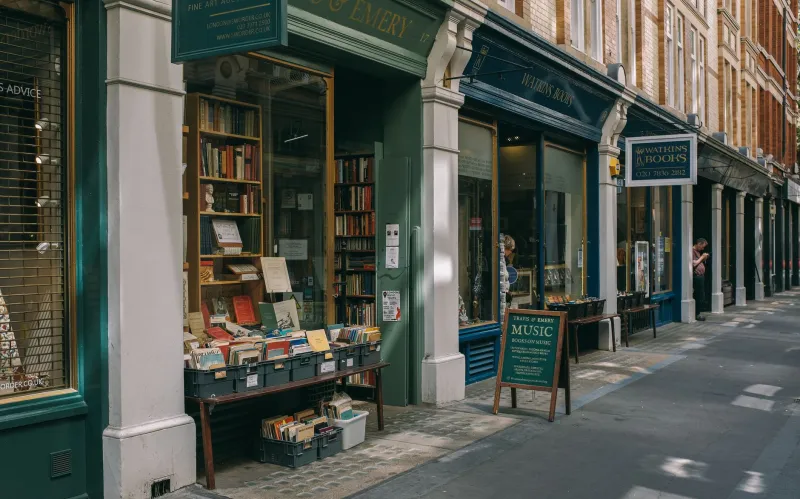
There is a particular kind of British high-street moment that happens when you are not really looking. You are on your way to the post office, or nipping out for milk, and a window stops you. Not a big department-store window with a budget and a lighting rig. A corner-shop window: one pane, a strip of blue-tack, a handwritten card about a school fair and, for reasons known only to the shopkeeper, a single ceramic duck sitting beside the lottery tickets.
In 2026, when so much shopping has been smoothed into apps, next-day delivery and identical shelving, that window still feels hand-set. It is arranged by someone who has to be behind the counter by seven. It is not optimised. It is not A/B tested. It is a small public act of taste, timing and local knowledge — and it deserves a slower walk.
The window as a small editorial act
Every display is a selection. The shopkeeper decides what goes in, what stays out, what gets the prime spot at eye level and what is left to curl at the edges. That is editing, even if nobody calls it that. A tray of eggs next to a poster for a church fete. A new brand of crisps placed beside the newspapers. A hand-painted sign for local honey, propped against a box of kindling. These are not random arrangements. They are clues about what the shop thinks matters this week.
Some windows are practical: bread, milk, batteries, the things you forgot. Some are chatty: raffle tickets, a missing cat, a card saying the post office counter closes early on Wednesdays. Some are quietly stylish: a greengrocer who stacks oranges like a still life, a deli with a chalkboard that changes daily. The best ones combine all three. They tell you what is for sale, what is happening and who is behind the counter — all without a single line of copy written by a marketing team.
What the glass is actually saying
A corner-shop window has its own language. Laminated notices are the civic layer: keep-fit classes, a lost dog, a coffee morning, a request for jam jars. Handwriting is the personal layer: prices, jokes, apologies for the lack of something, a note that the owner is on holiday. The stock is the commercial layer: the tins, the cakes, the newspapers, the improbable multipack of kitchen roll. Read all three and you get a portrait of a place.
The best displays are not necessarily beautiful. They are alive. A window with a Halloween pumpkin still sitting there in mid-November tells you something about the week the shopkeeper has had. A Christmas display that appears in late October tells you something else. A window with nothing but a chair and a notice saying 'back in ten minutes' can be more charming than a professionally styled shelf, because it is honest about how the day is going.
A field guide to reading the glass
Start at the edges. The main stock is obvious; the small cards, opening hours and local flyers are where the character sits. Look for the things that could only belong to this street: a poster for a village hall quiz, a card for a mobile hairdresser, a handwritten list of local eggs and jam. That is the shop's real inventory of trust.
Notice the handwriting. A printed sign is fine, but a handwritten one tells you someone made a decision in the moment. A chalkboard that has been rubbed out and rewritten has more life than a laminated 'special offer' that has been up since spring. Look for the correction: a price changed, a date moved, a spelling that has been cheerfully ignored.
Check the height of things. Practical stock tends to sit at adult eye level. Sweets and impulse buys are often lower, where children can see them. Notices are usually off to one side, as if they are trying not to get in the way. The whole window is a tiny piece of information architecture, even when it looks like a jumble.
And look for the one odd thing. A trophy. A cake stand. A single chair. A toy in the corner. A photograph of the shop in an older decade. That is the detail that turns a display into a signature. It says the shopkeeper has a sense of humour, or a memory, or a soft spot for something that does not strictly need to be there.
Why the slow walk still pays in 2026
Online shopping is efficient, but it is also forgettable. A corner-shop window cannot personalise itself to you in real time. It cannot recommend something based on your previous order. It just sits there, doing its best with what arrived on the van and what is happening on the street. That is exactly why it is worth stopping for.
A slower walk down the high street costs nothing and returns a surprising amount. You learn which shop is run by someone who likes a joke. You find out about a repair café, a choir, a jumble sale. You notice that the greengrocer has started selling local honey, or that the newsagent has put a chair outside for the regulars. These are small things, but they are the texture of a place. In a year when so much of life is designed to be frictionless, a window with a bit of friction — a handwritten notice, a slightly wonky display, a stack of eggs beside a raffle poster — feels like a good find.
The civic habit of looking
Stopping to look is a small vote for the street. Shopkeepers notice. A compliment about a window can turn into a conversation about the town, the weather, the price of everything. It is not a grand gesture. It is just a pause. But pauses are how high streets stay human.
The next time you are sent out for milk, take the long way. Cross the road. Look at the glass. The window is the shop's front door, its noticeboard and its little gallery all at once. It is free, it changes with the season and it is being made in front of you by someone who knows the street better than any algorithm. That is worth a slower walk in 2026.