Somebody Else’s Chapter: The Station Book Swap That Makes a Delay Worth Having
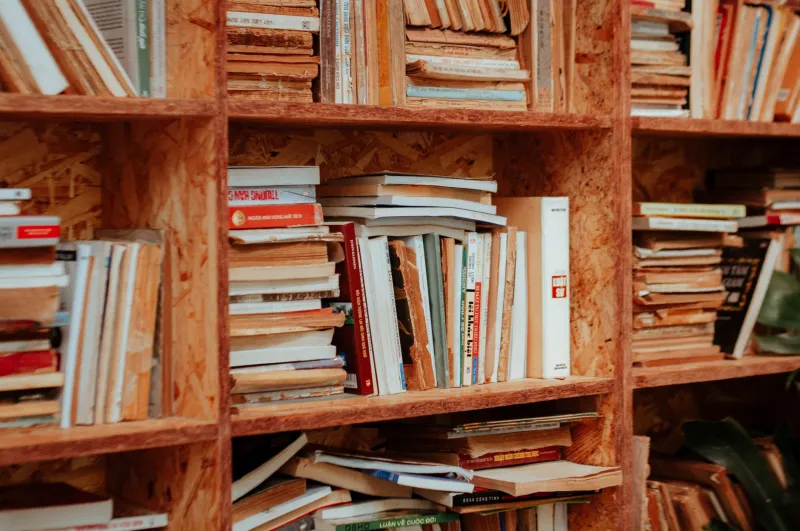
The train is late. Not dramatically late — just late enough that the coffee has gone lukewarm and the departure board has begun to feel like a personal critic. Then you spot it: a shelf by the ticket window, or a battered cupboard in the waiting room, or a phone box outside the station entrance with its windows fogged and its floor lined with paperbacks. A handwritten sign says something like “Take a book. Leave a book. Enjoy.”
This is one of the quietest, most useful institutions in Britain, and nobody officially invented it. Station book swaps are not libraries. They have no catalogs, no membership cards, no due dates and no fines. They are small, self-appointed exchanges, stocked by commuters, staff and people who finished a novel on the train and could not bear to carry it home. In 2026, when so much of travel is about scanning, tapping and being told exactly where to stand, there is something almost rebellious about a shelf of books that asks only that you be reasonable.
The shelf by the ticket window
You find them in the places where waiting happens. A wooden bookcase in a café on Platform 2. A plastic crate in the corner of a ticket hall. A repurposed phone box with a sign taped to the glass, usually slightly askew. Some are tidy, with books arranged by spine and a small tin for donations. Others are chaotic: travel guides from 2011, a thriller with a broken spine, a cookbook someone clearly regretted buying, and a copy of a local history pamphlet that has been there so long it has become part of the furniture.
The best ones feel like a room has been left in the care of strangers and the strangers have behaved. Nobody is checking. Nobody is counting. The shelf survives because most people are decent most of the time, and because a paperback is a low-stakes thing to trust someone with.
A paperback as a local weather report
What sits on a station book swap tells you something about the place, though not in a way a tourist board would ever use. A shelf in a market town might lean towards family sagas, farming memoirs and crime novels with muddy boots on the cover. A city commuter stop might offer management books, literary fiction and the kind of thriller that has “airport” written all over it. A coastal station will have something about local walks, a dog-eared romance and at least one book with sand in the binding.
You can also read the passengers. There is usually a copy of something sensible — a biography, a history, a practical guide to growing vegetables — and beside it something wildly out of place: a sci-fi epic, a self-help book, a pulpy romance with a clinch on the cover. That mix is the point. A station book swap is not curated by an algorithm. It is curated by whoever happened to finish a book and had a spare five minutes before their connection.
The unwritten rules
Every swap has its own culture, but the code is broadly the same. Take a book if you want one. Leave a book if you can. Do not clear the shelf because you have a holiday cottage and no shame. Do not use the swap as a bin for damp magazines or a tax return from 2009. Keep the books dry. Put them back roughly where you found them, or at least upright. And if you take the only book, accept that you have temporarily become the shelf’s entire stock management team.
The note inside the cover is often the best bit. “Please enjoy and pass on.” “Left here after a very good weekend.” “Not my kind of thing, but someone’s.” These are tiny, unsigned letters to the next person. They are also a reminder that a book does not have to be new to be a good companion. It only has to be the right book at the right moment.
Why it works better than it should
A station book swap should be a failure. It should be raided, neglected or turned into a soggy pile of paper within a month. But many of them keep going for years, topped up by a loose network of people who treat the shelf as part of the station’s furniture. That persistence is quietly impressive. It suggests that not everything needs an app, a subscription or a logo to work. Sometimes a shelf and a sign are enough.
The serendipity is the real luxury. You cannot search a station book swap. You cannot reserve a title. You cannot read the reviews. You just look at what is there and decide whether the first page is worth your attention. That is a different kind of choosing, slower and more personal. A stranger has already done the hard work of finishing it. Now it is your turn.
How to be a good borrower
The etiquette is simple: carry a spare paperback when you travel, even if you are not sure you will finish it. If you take something, try to leave something. If you finish a book on the train, leave it at the next station rather than carrying it around like a guilty secret. Do not take the whole shelf because you have a long journey and a short attention span. And if you find something genuinely good, put it back when you are done so someone else can have the same small stroke of luck.
Station book swaps are not a solution to literacy, loneliness or the cost of living. They are much smaller and much better than that. They are a reminder that travel is not only about getting somewhere. It is also about the half-hour before you do, and the stranger who left a book on a shelf in case you needed it.
The train will probably still be late. But at least you will have something to read.