Reading the Rail: How to Find a Real Wool Coat for Under Fifty Quid
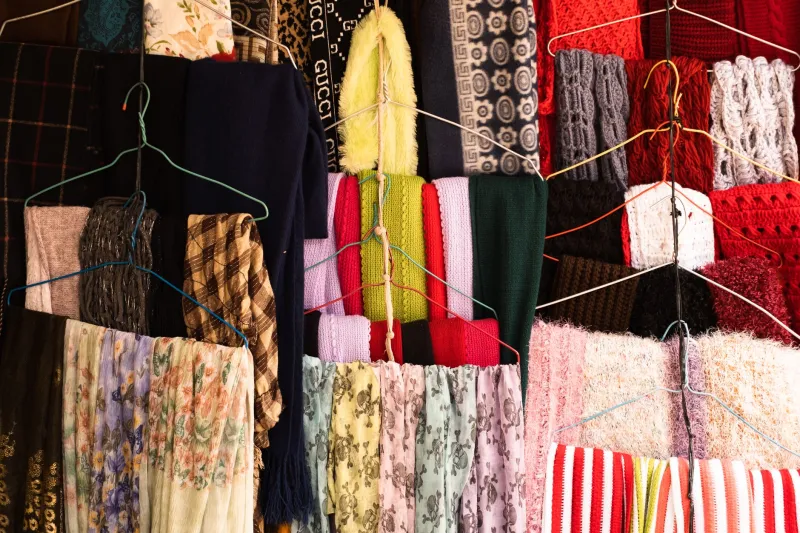
The £40 coat exists. I have bought three of them, and one is currently hanging on the back of a door in Sheffield, twenty-two years old, still doing the job.
Every November the same panic sets in. The temperature drops, the high street fills with coats that cost £85 and contain roughly the warmth of a bin bag, and everyone I know starts talking about "investing". This is a guide to not doing that.
What you're actually looking for
Wool. Not "wool-rich", a phrase largely invented by marketing departments to describe 30% wool and 70% hope. Turn the coat inside out and read the label sewn into the lining. If it says 70% wool, 20% polyamide, 10% cashmere, that's a coat. If it says 52% polyester, 41% acrylic, put it back — acrylic pills within a fortnight and traps precisely no heat.
Better still, look for 80% wool and above. Tweed, melton, hopsack, gabardine, Donegal. These are fabrics designed before central heating, for people standing at bus stops in February, and they still perform that job beautifully.
Reading a crowded rail in ninety seconds
Charity shops in affluent towns are where coats go to be forgotten. The trick is speed. Run your hand along the shoulders of every coat on the rail — you'll feel the difference between wool and a synthetic blend instantly. Wool is cool to the touch and has a slight grip to it. Polyester feels slick and faintly plasticky.
Then check three things, in this order:
Shoulders. They're the one part a tailor genuinely can't fix cheaply. If the shoulder seams hang past your own shoulder bone, walk away, however lovely the colour.
Moth. Hold the coat up to the window. Small holes at the cuffs, under the arms and along the hem are the usual suspects. One or two pinpricks are fine — a specialist can darn them invisibly for £15.
The lining. A worn lining is not a dealbreaker, but a torn one is leverage. Re-lining costs around £70 to £90 depending on where you go. On a £200 coat, that's still a bargain; on a £25 coat, it's a decision.
Labels worth knowing
You don't need to memorise a designer list. British and European makers that turn up constantly on secondhand rails and were built to last: Harris Tweed (check the orb mark), Magee, Johnstons of Elgin, Gloverall, Crombie, Dunn & Co, Jaeger, Austin Reed, Moss Bros, Aquascutum. Older Burberry trenches and coats turn up more often than people assume, usually priced by someone who hasn't looked at the label.
A word of caution on vintage sizing. A 1980s size 14 is closer to a modern 10 or 12. Always try on, and if you're buying online, ask the seller for pit-to-pit and shoulder-to-shoulder measurements rather than trusting the tag.
The five-second fabric test
Scrunch a section of the sleeve in your fist for five seconds and let go. Wool springs back. Blends crease and stay creased. This one trick will save you more money than any app.
What to ignore
Shoulder pads from the late Eighties can be removed by any competent alterations place for the price of a sandwich — don't let them put you off a good coat. Oversized buttons can be swapped in an evening with a needle and ten minutes. Pockets still sewn shut mean the coat was barely worn; that's a good sign, not a bad one.
Do, however, be honest about length. A full-length coat is magnificent and also a commitment to not cycling anywhere for four months.
The repair argument
Here's the part the fast-fashion maths never accounts for. A £70 high street coat will look tired after two winters and be in a bin bag after three. A £40 wool coat with a £25 invisible mend and a £8 button swap will be warmer in year five than the new one was in week one — and it will have a shape nobody else is wearing, because it was cut in 1978 for a person rather than a trend.
There's also something quietly satisfying about owning a coat with a history. Mine has been re-lined once, has a slightly mismatched button on the cuff, and has outlived every shop that sold me anything new.
Where to actually look
Start in charity shops in towns with a decent amount of older housing stock and a racecourse — Chichester, Harrogate, Cheltenham, Edinburgh's Morningside. Vintage fairs are pricier (£60-£120) but the stock is curated and the sellers know their fabric. Online, filter Vinted and eBay by material rather than brand, search "Harris Tweed coat" and "vintage wool overcoat", and set saved searches so the good ones find you.
Go on a weekday morning. Take a tape measure. Take your time, and don't block the rail.
A coat, properly made, is one of the few things you can still buy secondhand that performs better than new. That's not nostalgia — that's just wool.