The Field, the Fold-Up Table and the Art of the Haggle: A Car Boot Field Guide
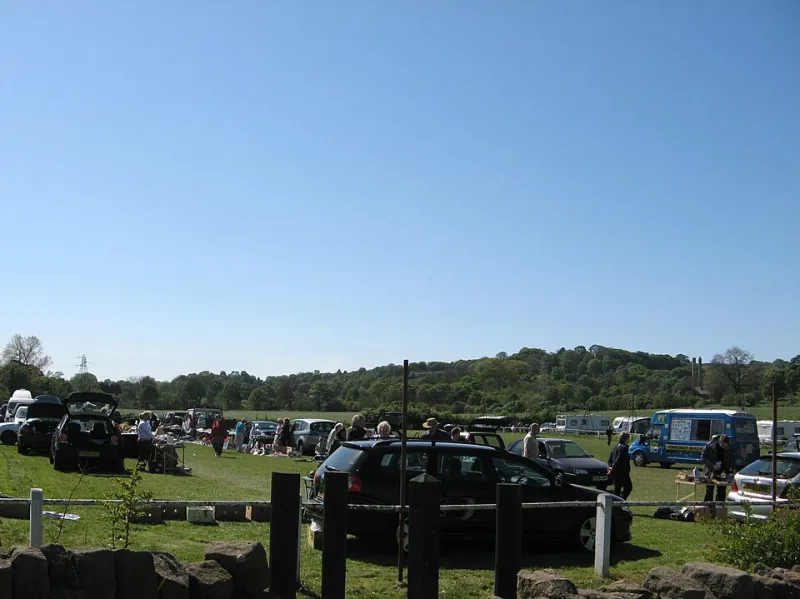
Photo: Stephen Armstrong , CC BY-SA 2.0, via Wikimedia Commons
The car boot sale is not a retail experience. It is a national sport played in drizzle, on grass, beside a hatchback with the parcel shelf propped open. There is no brand story, no loyalty card, no carefully curated display. There is a man called Dave, a folding table, and a set of golf clubs he is never going to use again. That is the entire pitch. And somehow it is more revealing about British taste than any high street chain.
The unwritten rules
Arrive early if you want the good stuff, but not so early that you are hovering while someone is still unpacking. There is a fine line between keen and annoying, and it is usually marked by whether the seller has had their coffee. Bring cash. Bring small notes and coins. Bring a sturdy bag and, in winter, a pair of gloves. Nobody wants to wait while you find the right app.
Ask before you pick something up. It sounds obvious, but a car boot is not a shop and the seller is not a shop assistant. They are a person sitting on a camping chair, watching you inspect their old possessions. Be decent about it. If you do not want the thing, put it back where you found it, not on the nearest random table. If you want to test an electrical item, ask first. If it is a clock, do not wind it. If it is a book, do not bend the spine while you decide.
Regional quirks
A Norfolk field is the Platonic ideal: long grass, sea air, a queue of people who all seem to know each other, and a surprising amount of garden produce. The sellers are patient. The bargains are quiet. You will find a set of brass scales, a wicker hamper and a paperback with a 1970s cover, and nobody will make a fuss about any of it.
West London car parks are a different beast. Multi-storey, concrete, sharp elbows and designer cast-offs. The haggling is faster and less polite, but the finds can be extraordinary: a good coat, a pair of barely worn shoes, a lamp that costs more than your weekly shop new. Yorkshire and the North East tend towards tools, crockery and blunt charm. The further you get from a city, the more likely you are to find a lawnmower, a set of golf clubs and something described as 'needs a clean' that absolutely does.
What to hunt for
Vintage denim is the obvious prize. Check the seams, the label and the fit, and do not be fooled by a good wash. Obscure kitchenware is the quiet joy of the car boot: a cherry stoner, a butter mould, a proper heavy pan, a set of tins that actually stack. A decent paperback is always worth a pound. Records are worth a look if you can see the vinyl, but assume the sleeve is lying to you.
Tools are usually good value, especially old hand tools that will outlast anything with a plastic handle. Frames, mirrors and textiles are worth a rummage if you can see past the dust. What you should leave behind is anything upholstered and damp, anything with a smell you cannot identify, and anything you are only buying because it is cheap. Cheap is not a personality.
The haggling script
Haggling is not a confrontation. It is a small, polite negotiation with a stranger who would quite like to go home with less stuff. The script is simple: 'Morning, would you take three for these two?' Smile. Wait. If they say no, either pay the asking price or walk away politely. Do not insult the item. Do not tell them what it is worth on eBay. Do not offer a ridiculous sum and then act wounded when they decline.
Bundling is your friend. Two paperbacks and a picture frame for a fiver is a reasonable conversation. A single 50p mug is not worth the theatre. If the seller is clearly packing up and the weather is turning, you have a little more room. If they are sitting under an umbrella looking miserable, be kind. The difference between a good haggle and a bad one is usually whether the other person feels like a person.
Why it says more about Britain than the high street
The high street is curated. The car boot is edited by life. You can see what people actually bought, what they actually kept, and what they are finally ready to let go of. You can see the good coat they never wore, the wedding present they never liked, the book they meant to read. It is a field full of small, honest decisions.
That is why it still works. It is thrift without the smugness, recycling without the lecture, and shopping without the soundtrack. You might come home with a vintage denim jacket, a decent paperback and a set of tins that stack. You will almost certainly come home with muddy shoes and a story. For Rannel, that counts as a good find.